






Can modular furniture actually grow with your life? Yes, but only if it's built to expand piece by piece instead of forcing you to buy a whole new set every time life changes. Here's the honest breakdown of how it works, and which pieces are worth building around.
What Is Modular Furniture, Actually?
Modular furniture is made of individual pieces, called modules, that connect, stack, or rearrange instead of one fixed shape you're stuck with forever. Add a seat when you need one. Add a shelf when the cabinet fills up. Rearrange the whole layout for a new apartment without replacing what you already own.
How Is It Different From a Regular Sofa or Cabinet?
A regular sofas and cabinets are a one size fits all solution. While modular pieces are sold as individual units and always ready to expand. So you can buy exactly what fits today and add more later in the same finish of fabric.
Meet: Modular Sofas
Modular means different things depending on the sofa. Three flavors, and knowing yours saves you a lot of scrolling.
- Seats that clip - Armless seats and armrests snap together with easy and fuss-free hardware, without the use of tools. Expand your combination as you go to form an L-shape today, U-shape next year or a pit when the group chat comes over. That's Macy, Qoosh, and SleepStash.
-
Blocks that move and expand - No clips, no bolts. Lift the backrest (or the entire seat) and set it down somewhere else. Non-slip pads hold your decision. Layers lift apart and lay flat wherever you feel like it. Pooof blocks move, JelliCouch layers move. Choose your fighter based on how quickly you get bored of a layout.

Once you know which type you want, pick by the look.
Meet: Modular Cabinets
Sofas are about shape. Cabinets are about two decisions: the look you want on the wall, and the mix of storage behind it. Get both right and one cabinet becomes a media wall over time instead of a piece you replace.
Start with what you're actually storing
- Open shelves for the things worth seeing: records, books, plants, the good ceramics.
- Closed doors for everything else: routers, board games, cables, snack overflow.
- Drawers for the small stuff that gets lost on a shelf: chargers, remotes, stationery.
- Display doors in acrylic or glass for collections you want protected and still visible.
Most rooms want a mix. Each collection below leans a different way, so pick the balance your stuff needs.

Blake: Classic Modern Farmhouse
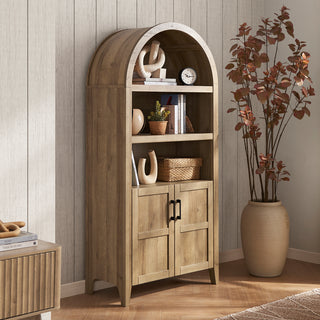
Arched door fronts or clear acrylic display doors, chamfered edges, brass handles, White Oak or Black Oak. The most versatile system of the four.
Storage type: Clear acrylic cabinets in short and tall keep your trinkets on display and dust-free. Closed cabinets take everything else, open adjustable shelves hold your everyday grabs, and the soft-close drawers do the most.


Retrovie: Mid-Century Modern
Warm walnut tone, tapered solid wood legs, recessed pulls and vintage gold handles. Design-literate without shouting about it.
Storage type: Narrow and wide open hutch shelving with adjustable shelves that displays your trinkets. Cabinets and drawers handle the rest, so you can show off your organization skills or quietly hide the lack of them.


Brooklyn: The one that goes with everything
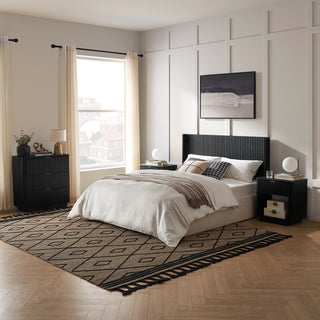
A softly fluted front with a rose gold handle in Golden Oak, Black Oak, or Natural Walnut. Enough texture to feel considered, neutral enough to sit beside whatever you already own. The pick when your style is still evolving, or when the room has a bit of everything in it.
Storage type: Open hutches with adjustable shelves put your keepsakes on show, while cabinets and dressers take everything else.


Norwin: Scandi meets minimal design
Fluted riviera oak brings the warmth, a powder-coated black iron ladder frame keeps the lines clean. Soft Scandi texture, stripped-back structure, and it grows up instead of out.
Storage type: Mix of open and closed storage, so you can display your personality on every shelf. A tall modular system that mounts to the wall for solid stability, then settles into your living room, bedroom, or study
Is Modular Furniture Actually Worth It for Renters?
For renters, yes. Pieces are sold individually, so you buy only what fits the current space, and modules break down small enough to travel through narrow doorways and stairwells. For everyone else, the value shows up over time: the same fabric and finish is still there in a year, so what you add reads like it was always part of the plan.
The short version
- Sofas: choose the silhouette and the feel first. Every one expands from 2 seats up, and the covers come off.
- Cabinets: choose the design style, then match the mix of open, closed, and drawer storage to what you own.
- Both: start with one piece. Add the next when life says so.
Ready to build a setup that keeps up with you?
Shop Modular Furniture and don’t worry, growing as you go is the whole point.